Messing About With Tractors
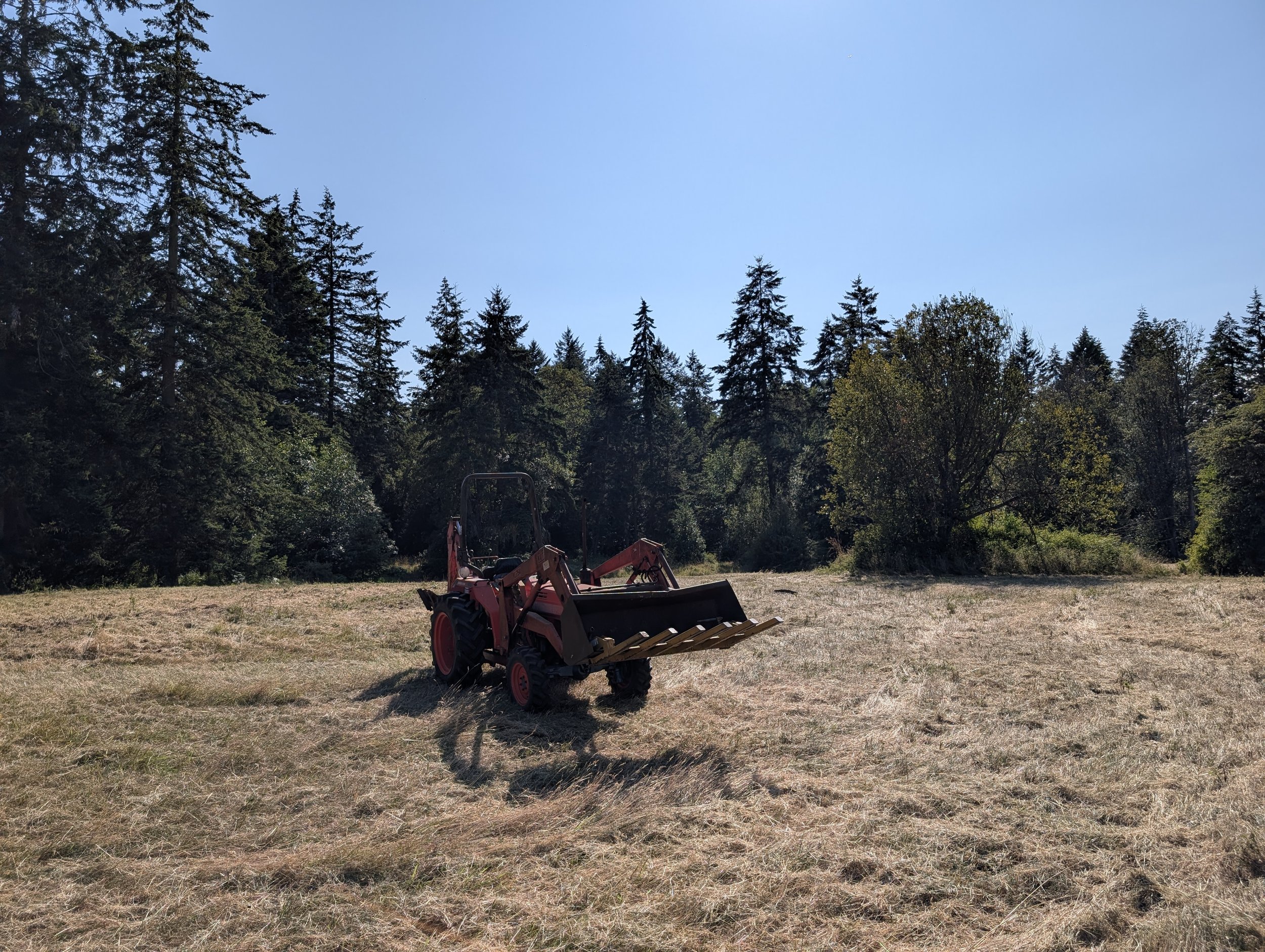
“Little Red” - our trusty, rusty Kioti
You don't have to have read The Wind in the Willow to know the Water Rat's universally-quoted declaration that there is nothing half so much worth doing as simply messing about in boats. I think it unlikely that anyone has made the same declaration about tractors. But sometimes one finds need to spend substantial amounts of time doing precisely that aforementioned messing.
Me, for example. Today. For someone who swears up and down that he's not a farmer, I seem to spend an awful amount of time messing about with/in/on tractors. My excuse is that while Natembea is home to eight projects/businesses run by eight-plus independent farmers, the majority of the land here - about 40 acres worth - is ungrazed, unleased pasture.
Early on, wandering the hollows of the southwest brush pasture, I had a vision of leaving it all untouched, letting it be a little wilderness we could explore and tromp through from time to time as it returned itself to primeval PNW forest.
What I hadn't counted on were all introduced species that were, by dint of their evolutionary drives, intent on making it over in their own image. Cheatgrass, for example, loves open ground. It comes up early in the spring, before the other grasses have really woken up, and gives them a bit of a bum's rush. The species' formal name - "ripgut brome" tells you pretty much all you need to know about why this is a Bad Thing.
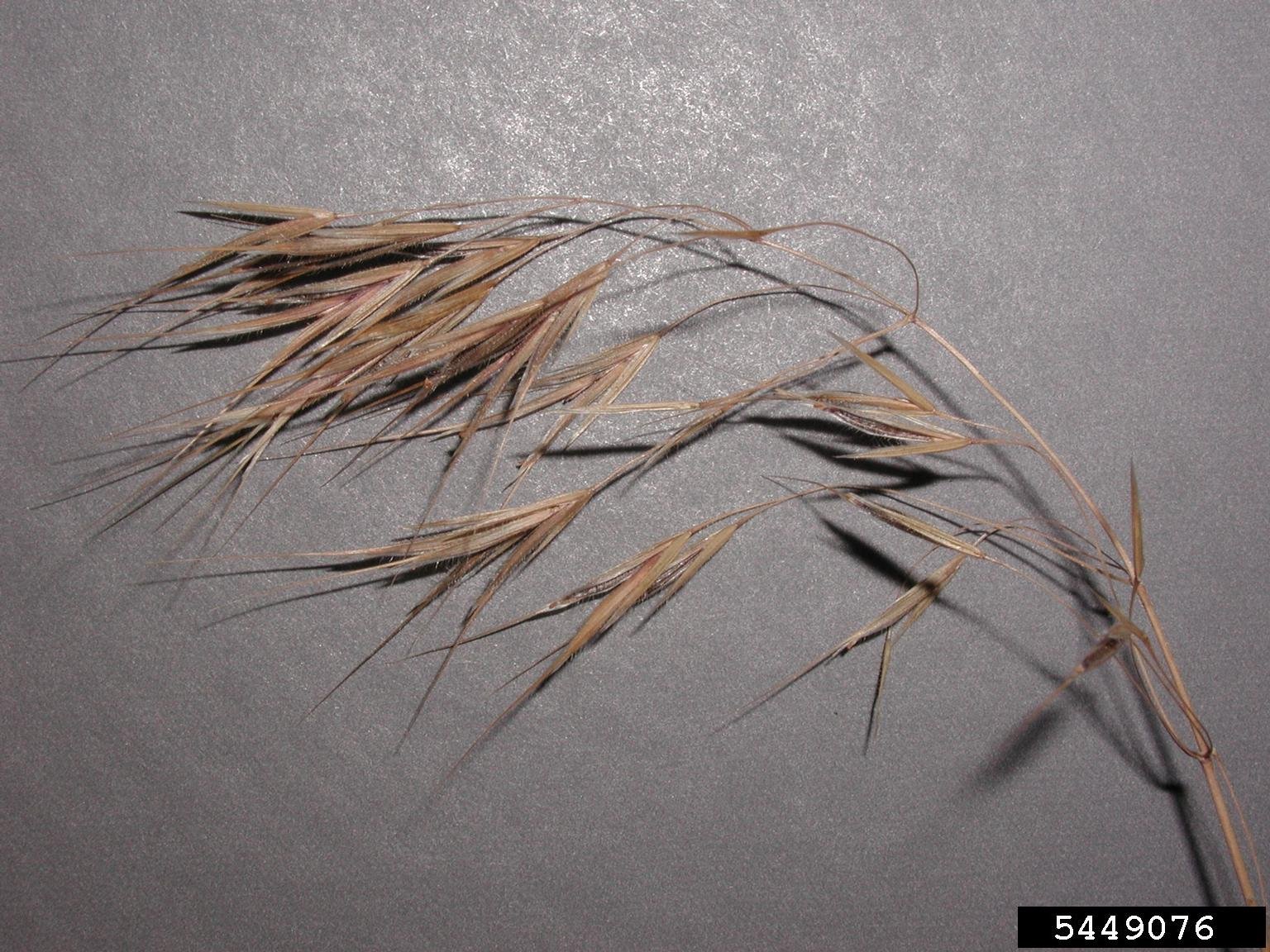
Cheatgrass mugshot
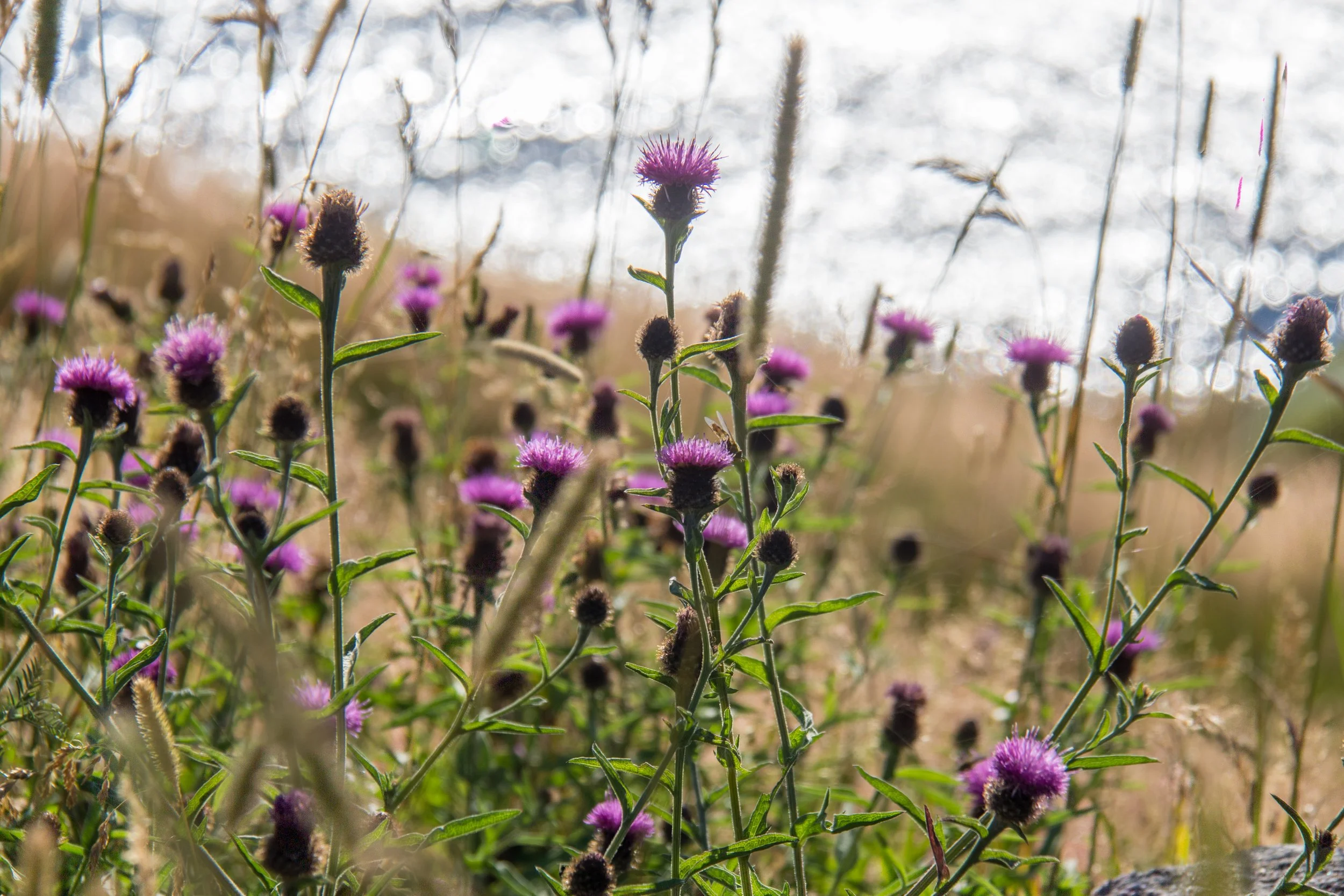
Then there's the gorgeous, gregarious and pervasive Canadian thistle. Pretty in purple, but unless dealt with quickly, will turn any non-established space into a snowy field of stabby spines.
And then. Then there's the unstoppable, Borg-like Nootka rose. You can stop cheatgrass and thistle by mowing them at the right time - hitting them right when they're ready to bloom. Do it a few years in a row to deplete the decade or so of viable seeds in the soil, and they'll retreat. But Nootka - a lovely little wild rose - sends runner for up to a dozen feet under the ground between surfacings, and will wait there, dormant, for you to turn your back. Miss it for a year, and the entire pasture is waist-high in prickly woody stems. Two years and it's as tall as you are, an impenetrable thicket. The pasture is, for all intents and purposes, gone. Mow it to the ground, and it'll be back in a month, drawing on its subterranean reserves. The only way to stop it is to physically rip all those roots out of the ground.
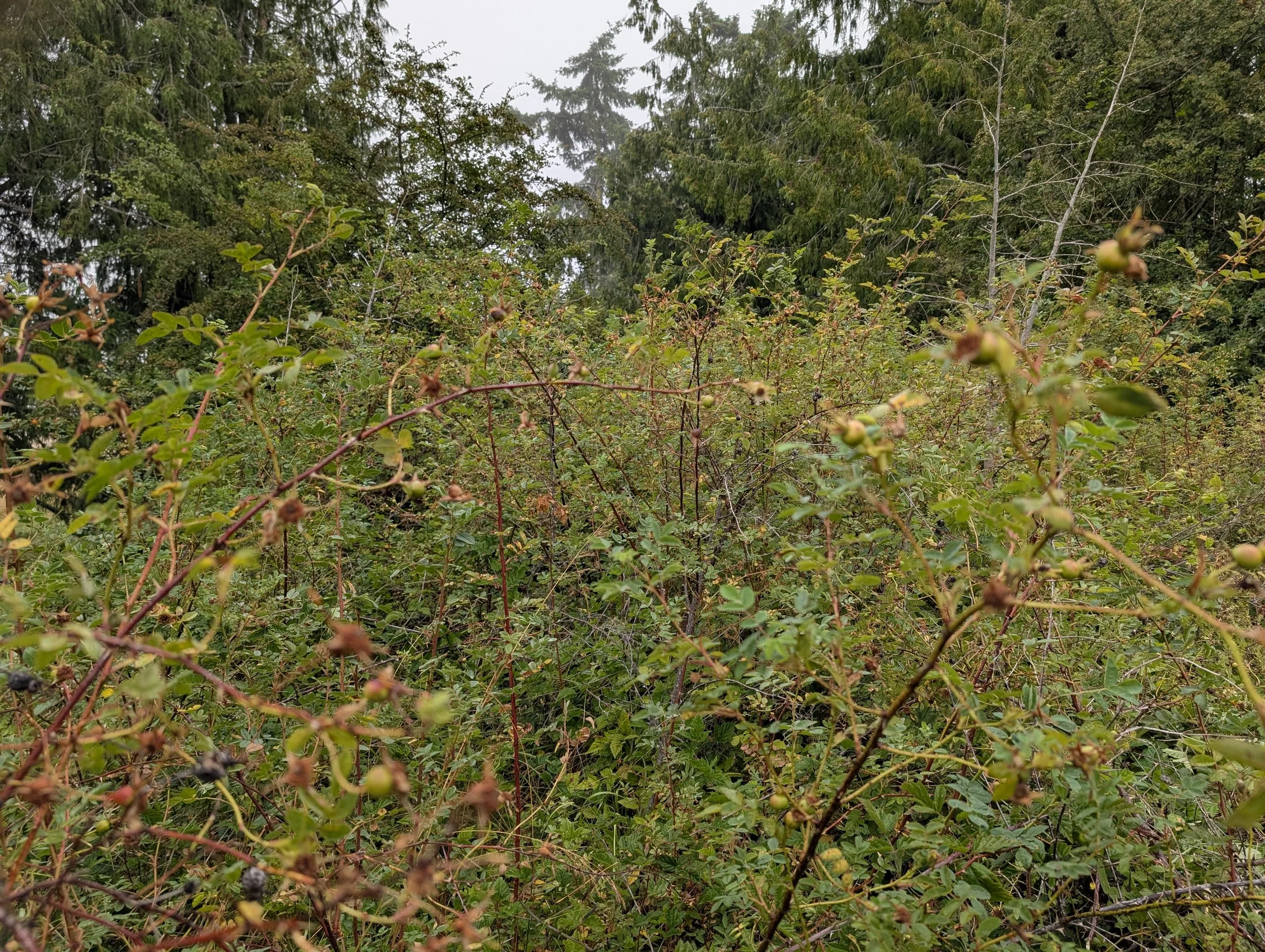
Turn your back on a pasture for something like fifteen minutes, and Nootka rose will turn it into this.
Have I mentioned that we've got 40 acres of pasture? Pretty much all of which have cheatgrass, thistle and Nootka rose? Suffice it to say that I spend a lot of time driving slowly around in circles, Sissyphus on a tractor, mowing down what's just going to grow right back.
Some of our pastures, weed-infested or not, are fairly even, and clear of obstacles. Those are fun. I can put an audiobook on, and go back and forth, cutting swooping swathes that are pleasing to the eye when viewed from the deck in the evening light, with a cold drink in hand.
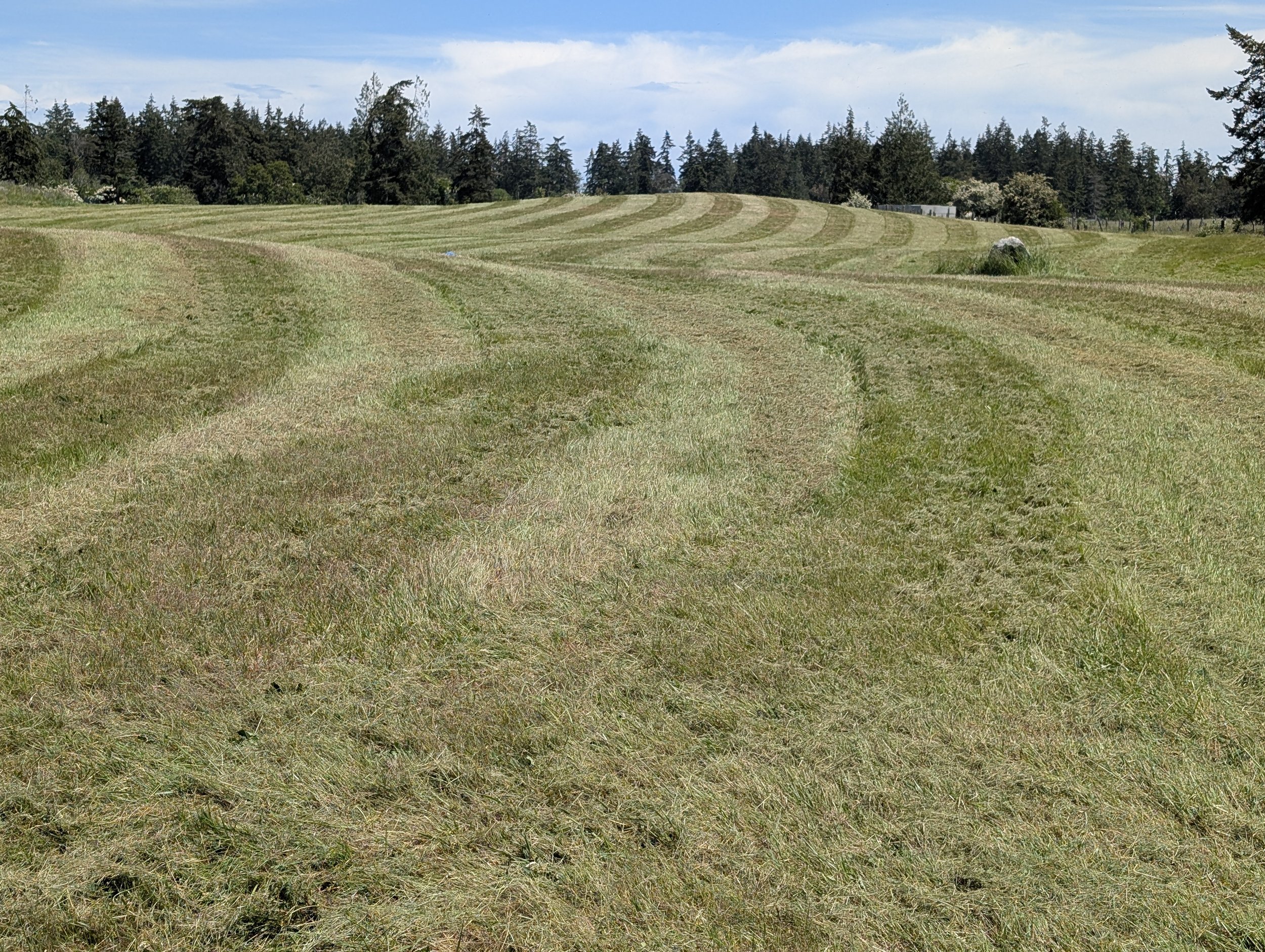
But others, specifically that wild southwest brush pasture, require constant re-thinking, re-evaluation of how to hit that particular bit of thistle without getting wedged between a couple of trees, or high-centered on a hidden stump, stuck in a hidden gully or - most terrifying of all - hitting that gully off-center and rolling the tractor. It's nerve-wracking work and to date, I end up getting the tractor stuck/wedged/disabled back there about one time out of four. Today, I almost got two tractors stuck.
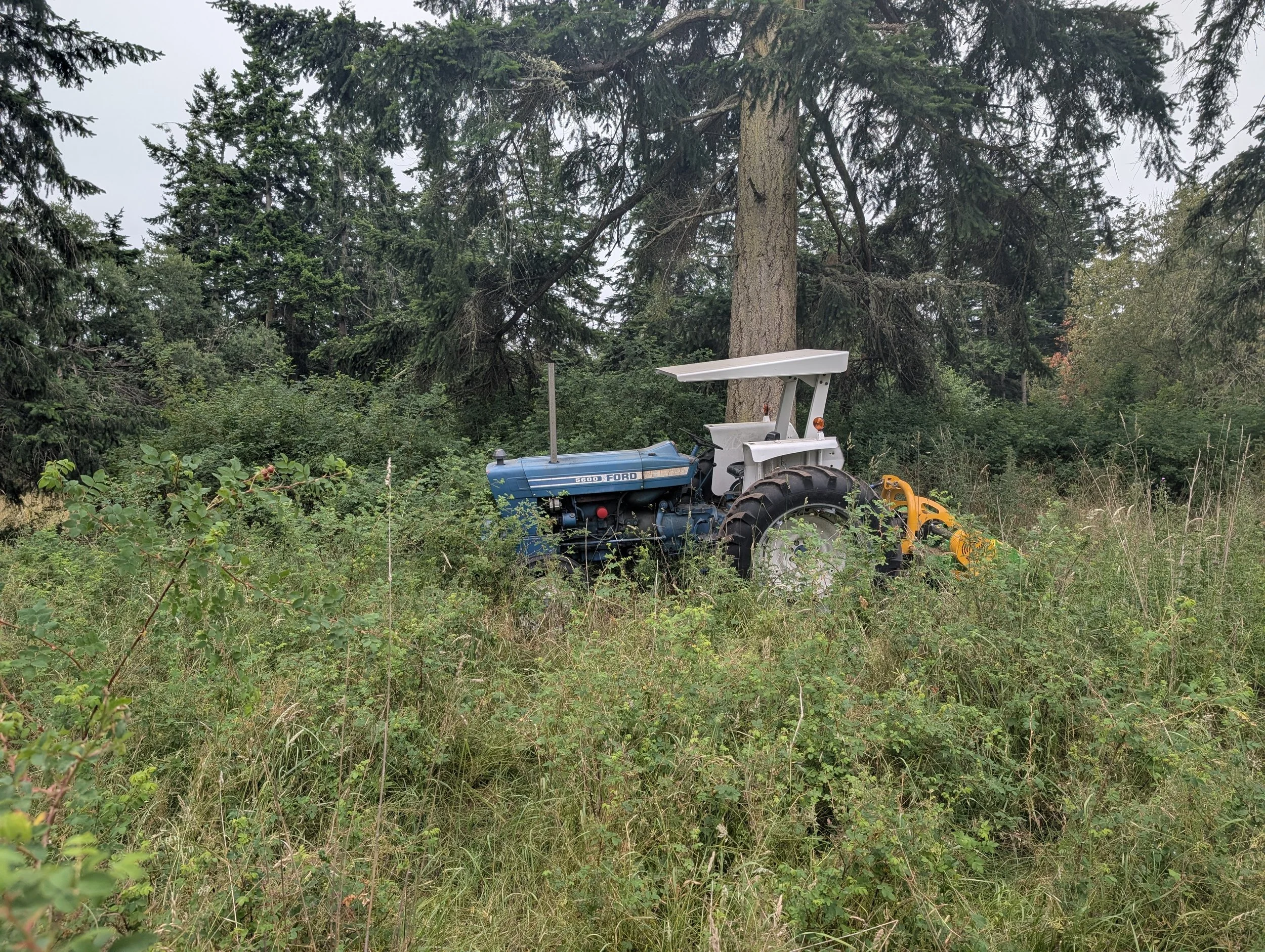
Big Blue high-centered on a hidden stump amidst a meadow of Nootka rose last month.
I'd managed to get the worst of the thistle back there a couple of weeks ago - there was one dense, localized patch just above the wetland. But while checking on my work yesterday, I discovered that a few acres that I thought were relatively clean actually had a dense infestation of Nootka rose hiding just below the tops of the dried grasses.
Well, dang. So I saddled up our Ford 5600 - "Big Blue" - and set out to knock it all back with the flail mower. Which I did, uneventfully. But then, between a couple of trees at the southern edge, there was the tallest, healthiest stand of Canadian thistle I'd seen in a while, purple buds ready to pop open to the world. I'd just take a couple of swings through to knock those back while I was at it.
It was on the last pass that the tractor's mains simultaneously dropped into the hole masked by rotting pine duff, and there I was, wheels a spinning.
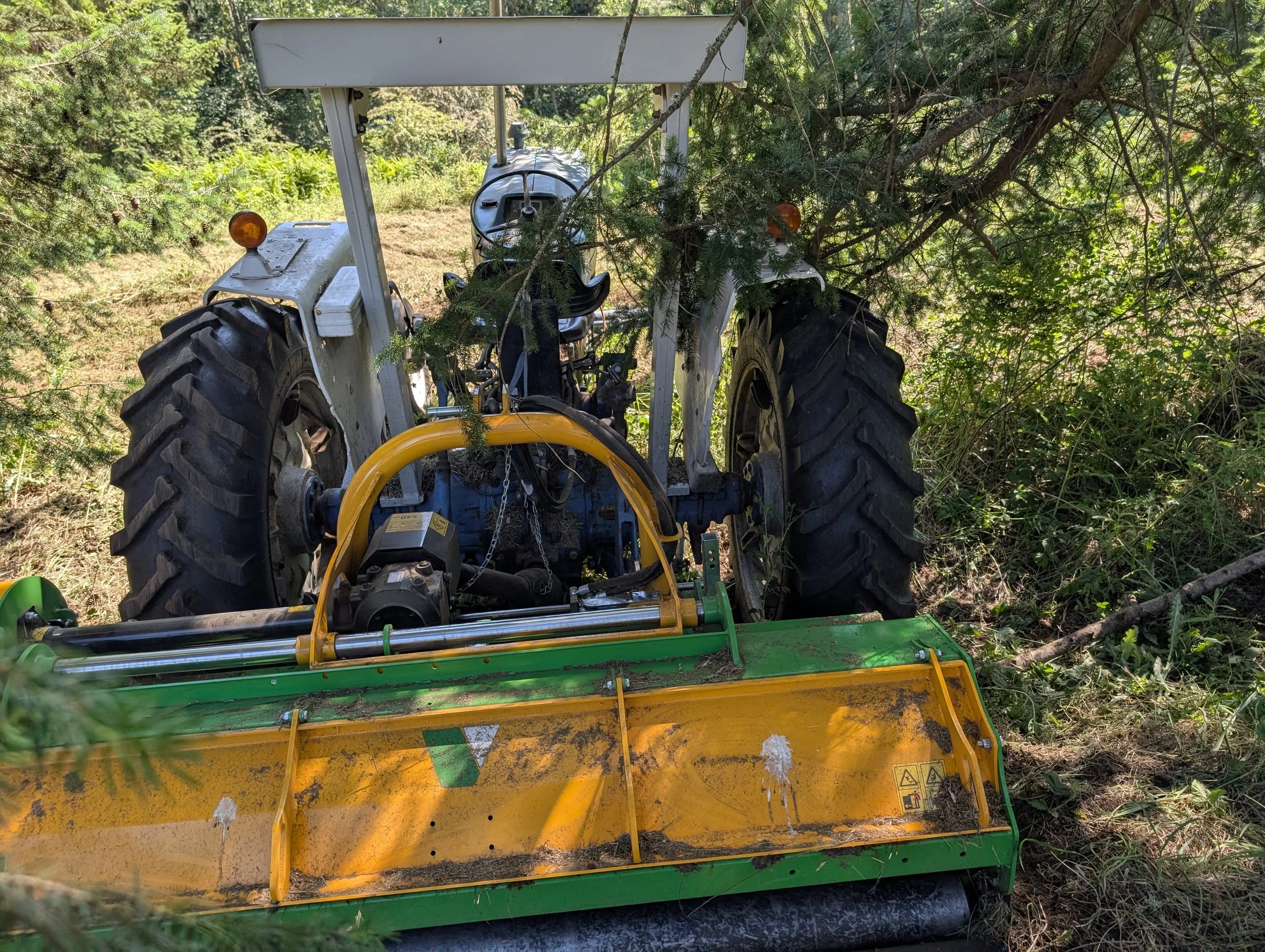
As I said, getting the tractor stuck is not an unusual event for me. And the combination of pride at self-sufficiency and embarrassment at getting stuck has always been enough in the past to motivate me to get the damned thing unstuck myself, so I went through my usual drill: lock the differential, try to back it out. Nope. Find some logs to wedge under the tires. Nope - there's so much loose duff under there that I'd have to bury a couple of trees. Dig out the blockage? Nope, can't even get under the part of the chassis that's wedged. And this puppy weighs about 7,000 pounds, about as much as three Volkswagens.
Of course this happens at the most remote corner of the farm. And on the hottest day, so far, of the year.
Let's fast forward an hour, to where I've tried all of my tricks and am covered in enough dirt to qualify for a small farm grant of my own. I check the tank for my pride and embarrassment levels, pull out the phone and text a few of the usual suspects to ask for help.
Alas, everyone - everyone - appears to be off-farm this afternoon, so I trudge, aching and sweating back to the barn to fetch our other tractor, Little Red, a leaky, aging, but still trustworthy - when it starts - Kioti. Throw a load of chain on the backhoe seat and drive it back across the farm to where Big Blue waits forlornly.
I'll cut to the chase, skipping the two tries where I couldn't pull Big Blue back out of the hole, and the one where I almost pulled Little Red sideways into a different gully. Finally found a configuration pulling forward where, in low gear with all four wheels spinning, I eased the big old guy out of the hole, onto a rise and, with some unexpectedly deft maneuvering, avoided having it chase me down the rise and crash into me. (Yes, in case you're wondering, I always wear my seatbelt when tractoring. One little bit of stupid can go a long way when you're dancing with heavy machinery.)
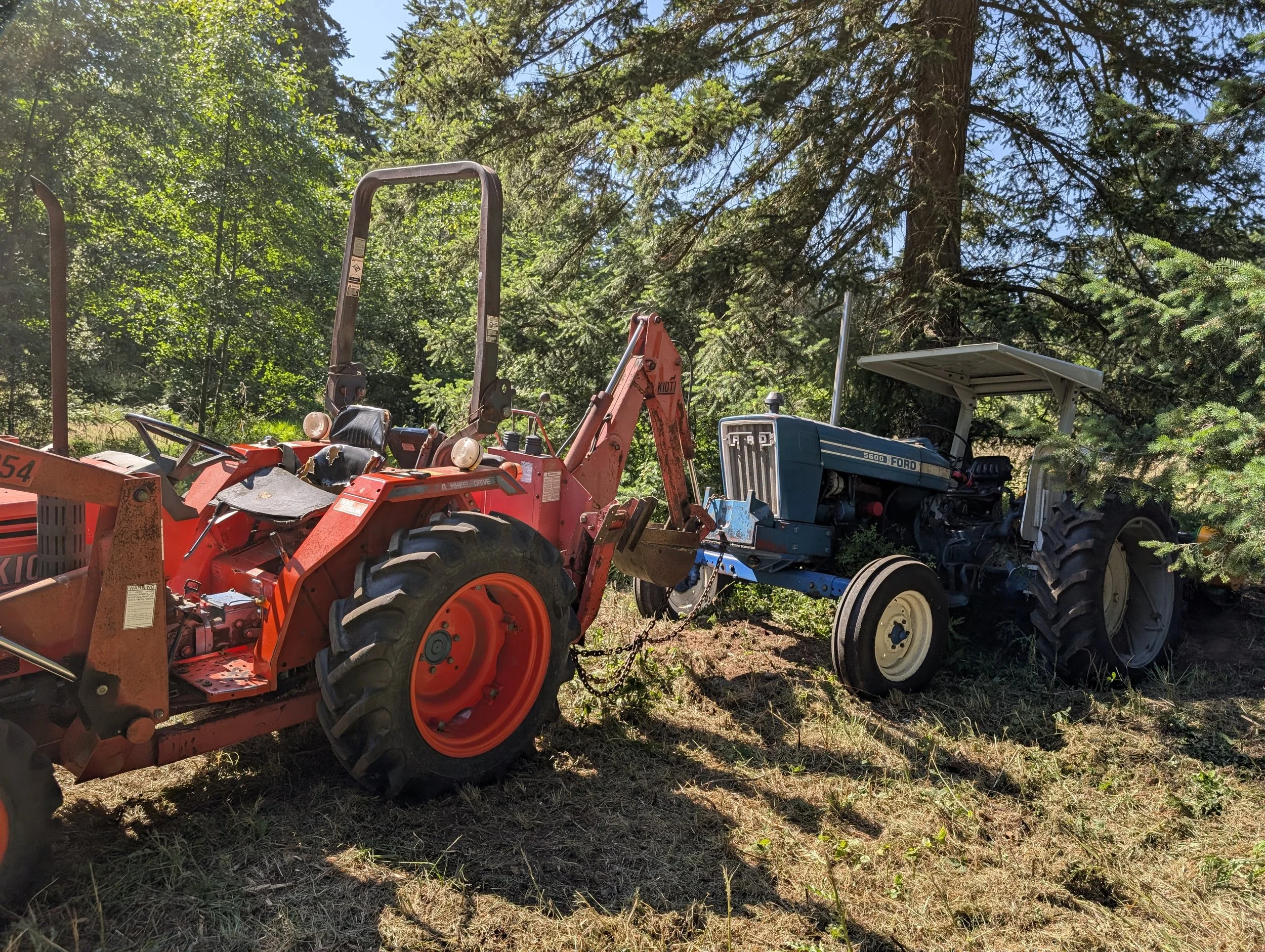
Flipped a coin and decided to leave Little Red there, hoping she'd start again and drove Big Blue back to the barn. Amber and Lindsay had arrived by then, and were feeding the New! Baby! Goats! They not only lent a sympathetic ear to my misadventure, but Amber insisted on driving me back out as far as their truck could make it to save me the second long walk of shame out to the brush pasture.
Improbably, Little Red started right up, saving me from shaking my fist impotently at the sky, and ten minutes later, both tractors were tucked away in their respective spots. And for my part, I'd had all the messing about with tractors I could handle for the day.
Finally, to reward you for reading so far, here’s Gimli who, along with sibling Ponyo, is one of our two newest residents.
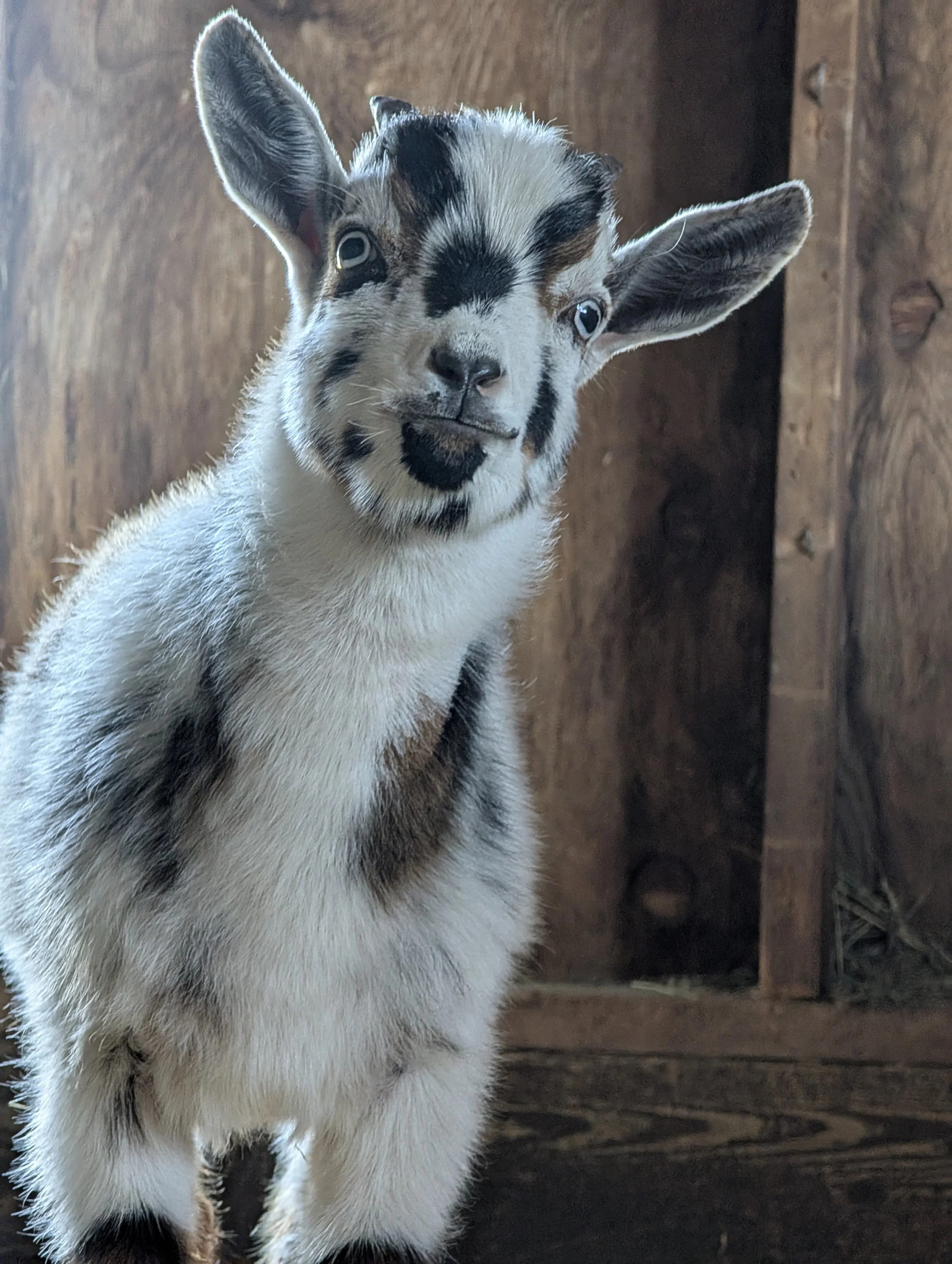
Baby goats make everything better.